
Between here and then
An Emerald Isle Story

My dad has always been a great storyteller and re-storyteller, recounting the surf trips and road trips from our childhood, and his, over and over till we know which one is coming and start laughing before he even gets to the good parts.
He retired last year, after he kept asking his patients where their pain was over and over, doing the same examination twice and then three times. Since then, he’s been dictating his stories and sending them to me in emails. Some are long, some short. Some are really short – ending with “I don’t remember.” The best ones are about the miracles he’s witnessed, like the ketchup miracle or the parking spot miracle.
I imagine reading and rereading his stories to my sons when their older, so they can have them have them etched in their laugh lines too.
I wrote this poem in college about his stories.
My Dad
my dad grew up barefoot
down east
bleach blonde and sunburnt
six kids,
one momma
in a trailer
on an island
now this could be a sad story
but my dad never told a sad story in his life
he has you laughing till you cry
bout the hole in the trailer
so big a possum got in
the poisonous well water out back
that turned his hair orange
1960’s North Carolina
my Dad went to segregated schools
his best friend drove the white kid bus
and he drove the black kid bus
raced the buses after school
the kids hootin’ and hollerin’ in the back
racing through stoplights and stop signs
he drove the bus like it was his
parked in front of the trailer
drivin’ his friends around the island
this island is magic for me and my brother
where our parents’ fell in love
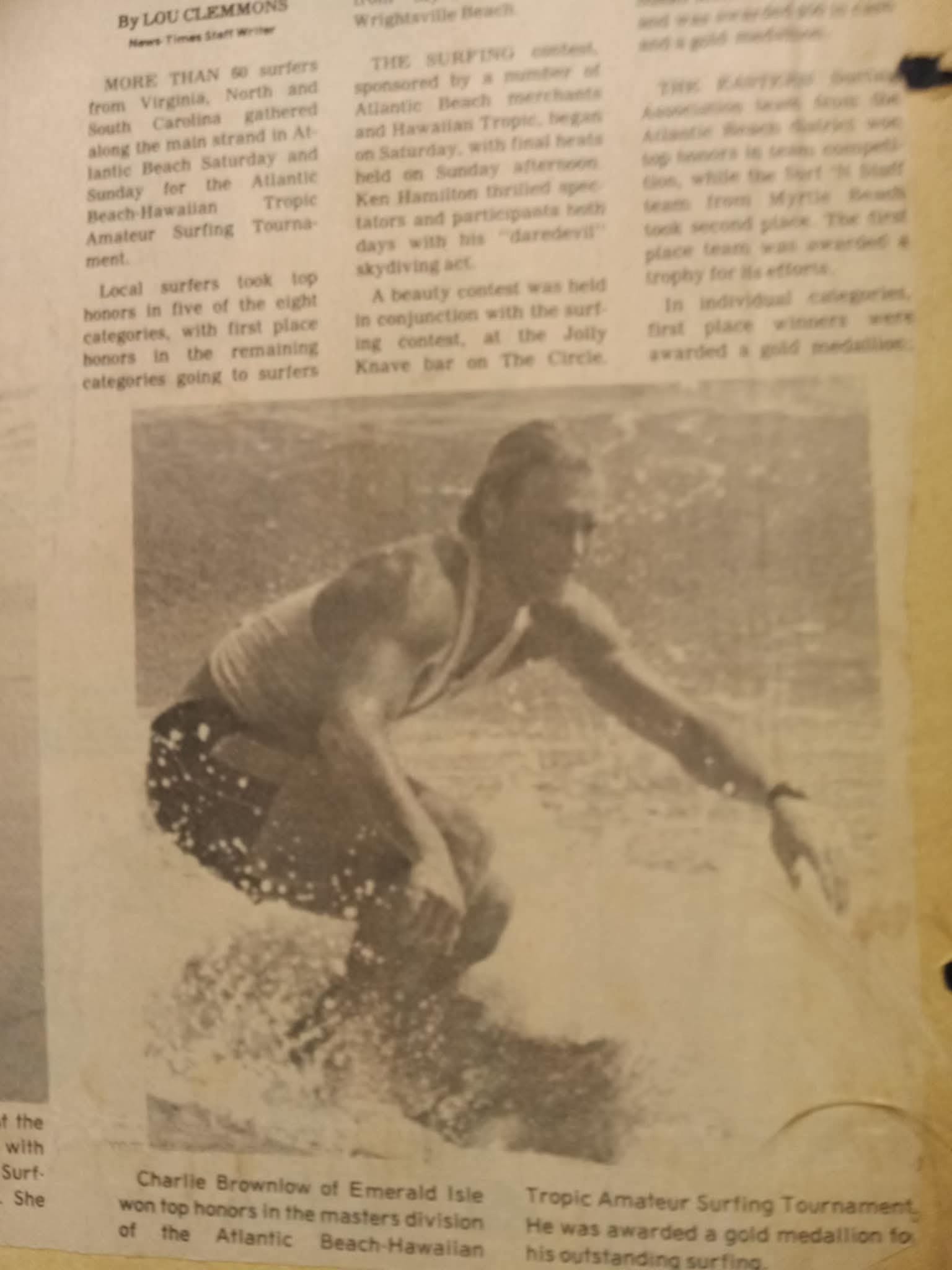
where our dad became surf champion
we still go back to the island
sit on the beach in the rain
and watch our dad surf
you know, the best waves
are during hurricanes.
Since he’s retired and started having more trouble with his memory, it feels like he’s been traveling through time, talking about his mom more and telling stories of his best friends as a kid growing up on Emerald Isle, North Carolina. I love his stories about Emerald Isle back before the bridge was built.
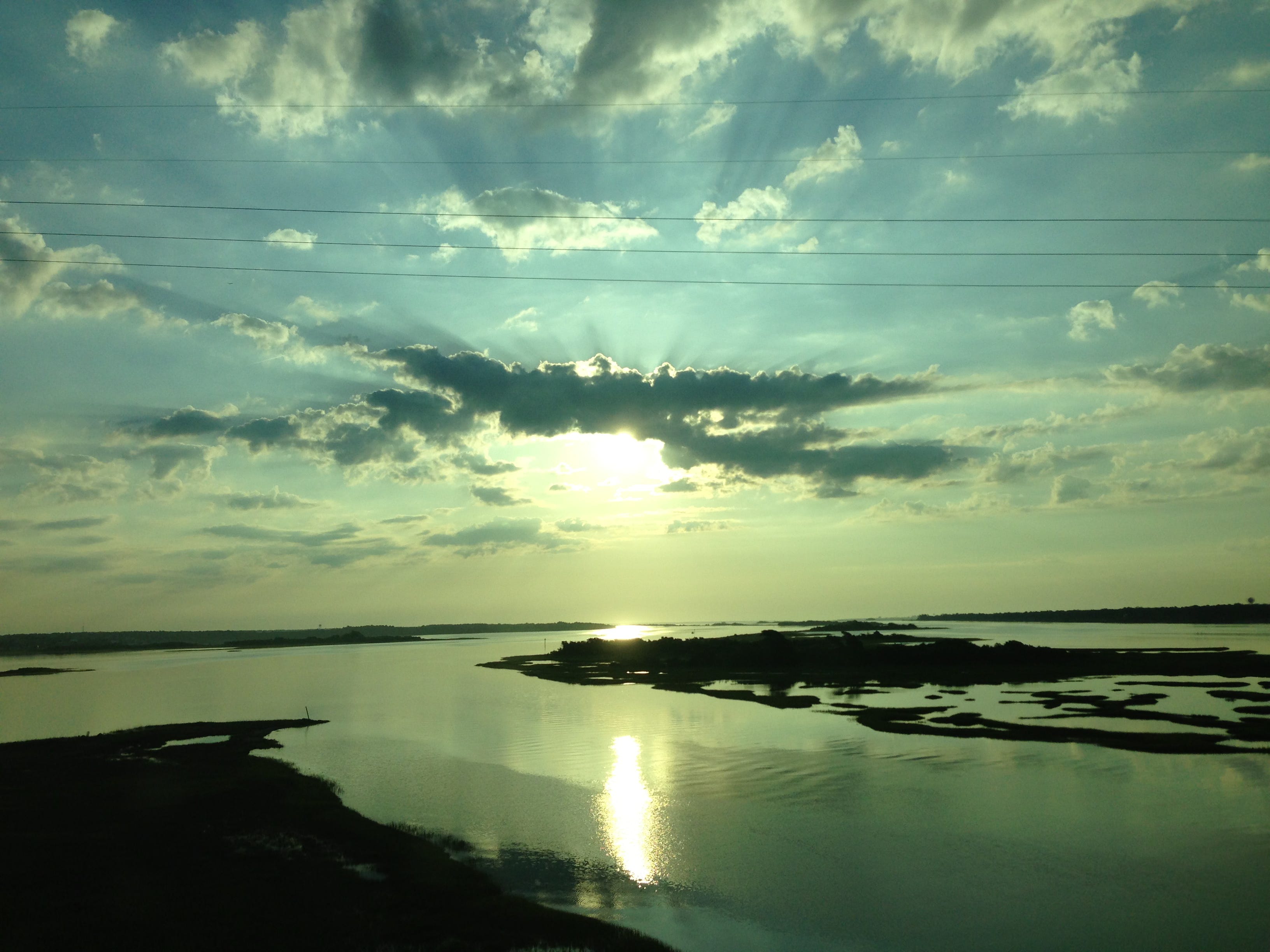
Emerald Isle is a barrier island off the coast of North Carolina, with the Bogue Sound dividing it from the mainland. The Algonquin Indians lived on the island and on the surrounding mainland starting around 500 A.D., but the island remained undeveloped covered in maritime forests, emerald green with live oaks and grasses covering the white dunes until the 1950s. It was then that families like my dad’s built small cottages or in our case – brought their trailer and set them up on the sands.
Emerald Isle remained relatively remote till the mid-1970s, with access from the mainland by ferry. In 1971 the B. Cameron Langston bridge was finished, officially connecting the island to the mainland.
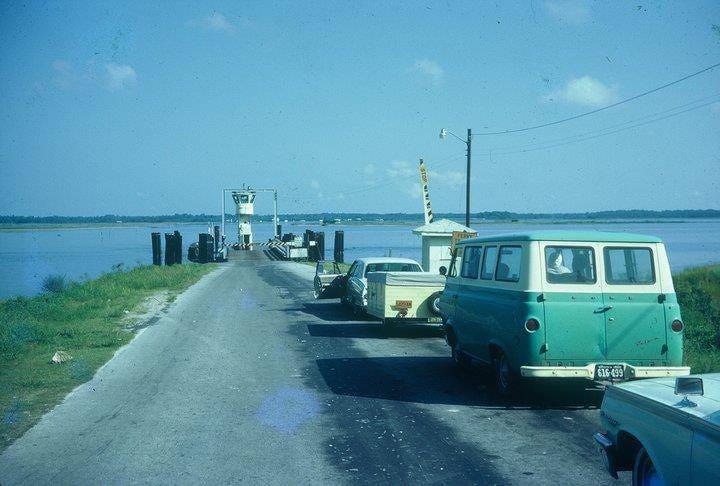
Here’s one of my Dad’s stories about growing up on the island before the bridge was built and Hercules, his favorite dog.
Hercules, he was a real nice dog. We moved to the beach, and then we moved our trailer down to a more inland area, it’s near the building called the Trading Post. And we stayed there, and somehow we got a little dachshund. Hercules. It was Bobby’s dog. And Hercules was one of the nicest creatures God ever put on the planet. He was such a nice guy.
And I used to love it back then, you didn’t have to. There weren’t a lot of people on the island, especially like in the wintertime. I’d be in a group of about five or six guys, we’d be skateboarding and all this kind of stuff, and then Hercules would be with his group of guys, of dogs you know? And then we’d come up, and everybody would socialize with each other.
All the dogs would want to get petted on the head, and then we’d all want to, you know, we’d just hang out with the dogs, and then everybody says, “OK, we gotta go.”
So the dogs took off, and then Hercules went up with them. And Hercules, he was a male dog, but he just wasn’t built to be able to have a baby or anything like that. I mean, everybody had a home, but they would get back.
Back in those days, nowadays, you know, you never think, you never want to let Buster go running around and everything like that. But back in Emerald Isle, it was just, you know, you had a boy, you had the kids, they’re running around, had the dogs running around, and everybody, I mean, it was a different time, a different era.
And then the ferry, they didn’t have a bridge to get on the ferry, and it took about 20, 30 minutes to get to the other side of the sound.
And then, there was the Salter Path. There are tough people. They had the strongest accent you’ve ever heard. “My lord honey Lord, I’m going to keep going on and on and on”. And it’s like Down East or Old English slang, you know, from the English boats when they came over.
— Charlie
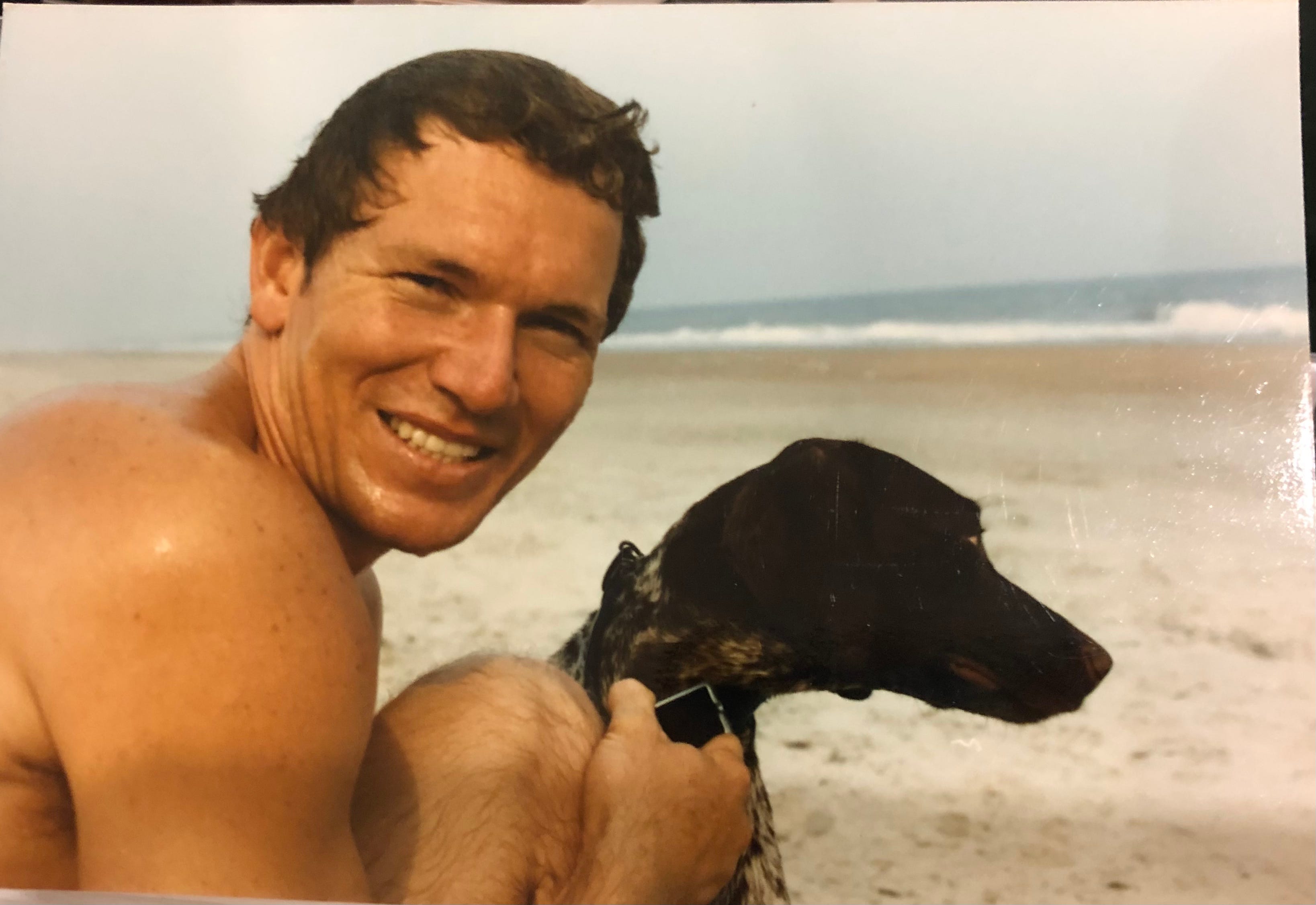
I like to picture the island back then – green and running wild with not quite wild skateboarding boys and dogs. My dad is a surfer through and through. He still surfs almost every day and has checked the surf online by the Emerald Isle pier almost every day too, even when we lived in Atlanta — far from the coast.
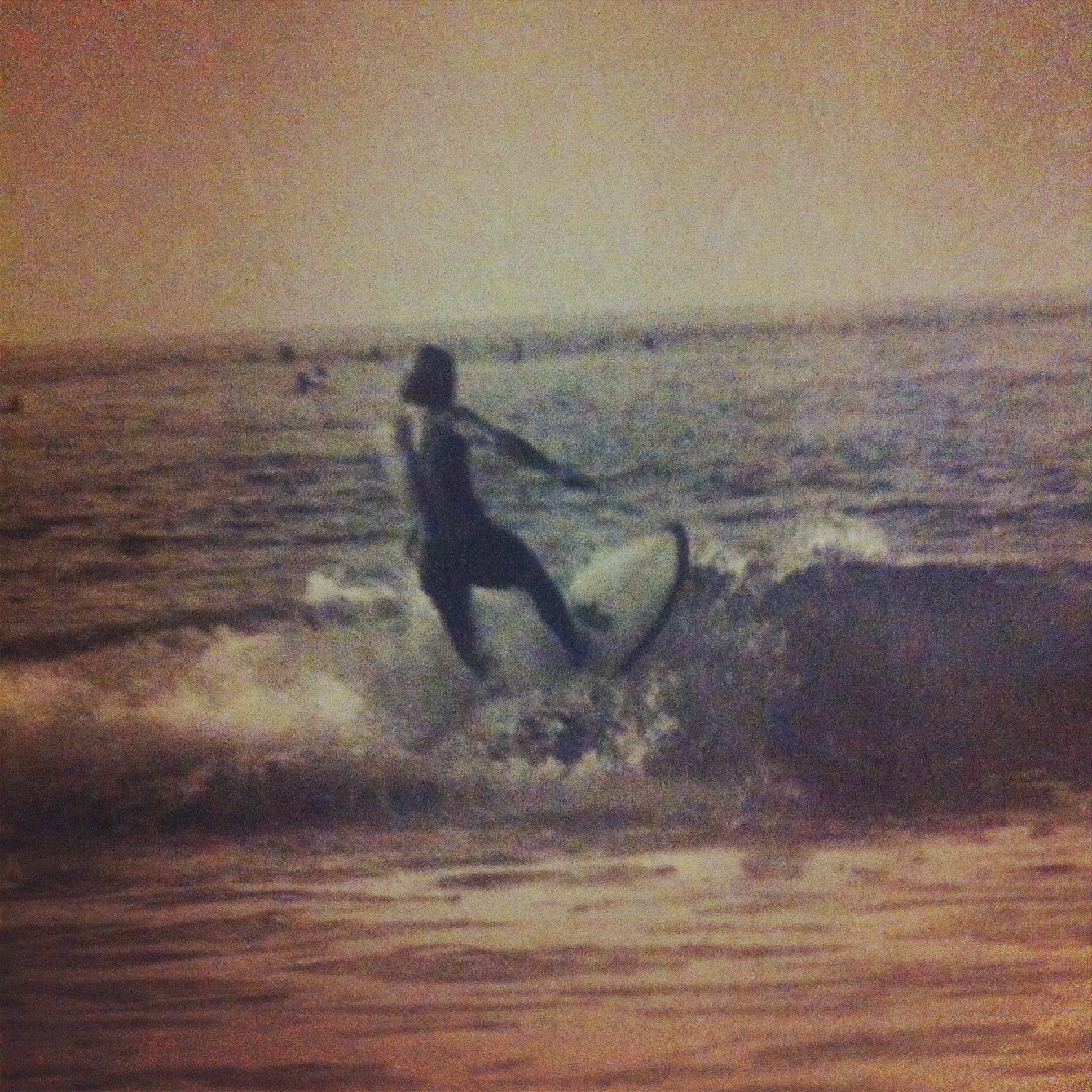
We spent a lot of our childhood watching him surf – even in the rain. He’d dig me and my brother a big hole in the sand on rainy days. We’d put a towel in the hole and some boogie boards on top and watch him paddle out through the crack between the sand walls and the boogie board roof. I remember listening to the wind whipping, smelling the sea, the rain and the sea water of the frothy waves mixing together and resting in tiny droplets on our eyelashes.
Once when we were on Cape Hatteras, another North Carolina barrier island, he bought me a black surfing hoodie with pink hibiscus flowers on the back at a surf shop. It was too big but I loved that sweatshirt. I go back to that feeling of watching him surf through the mist with my hoodie on, the strings pulled tight under my chin, the sand of the wet dunes underneath my feet.
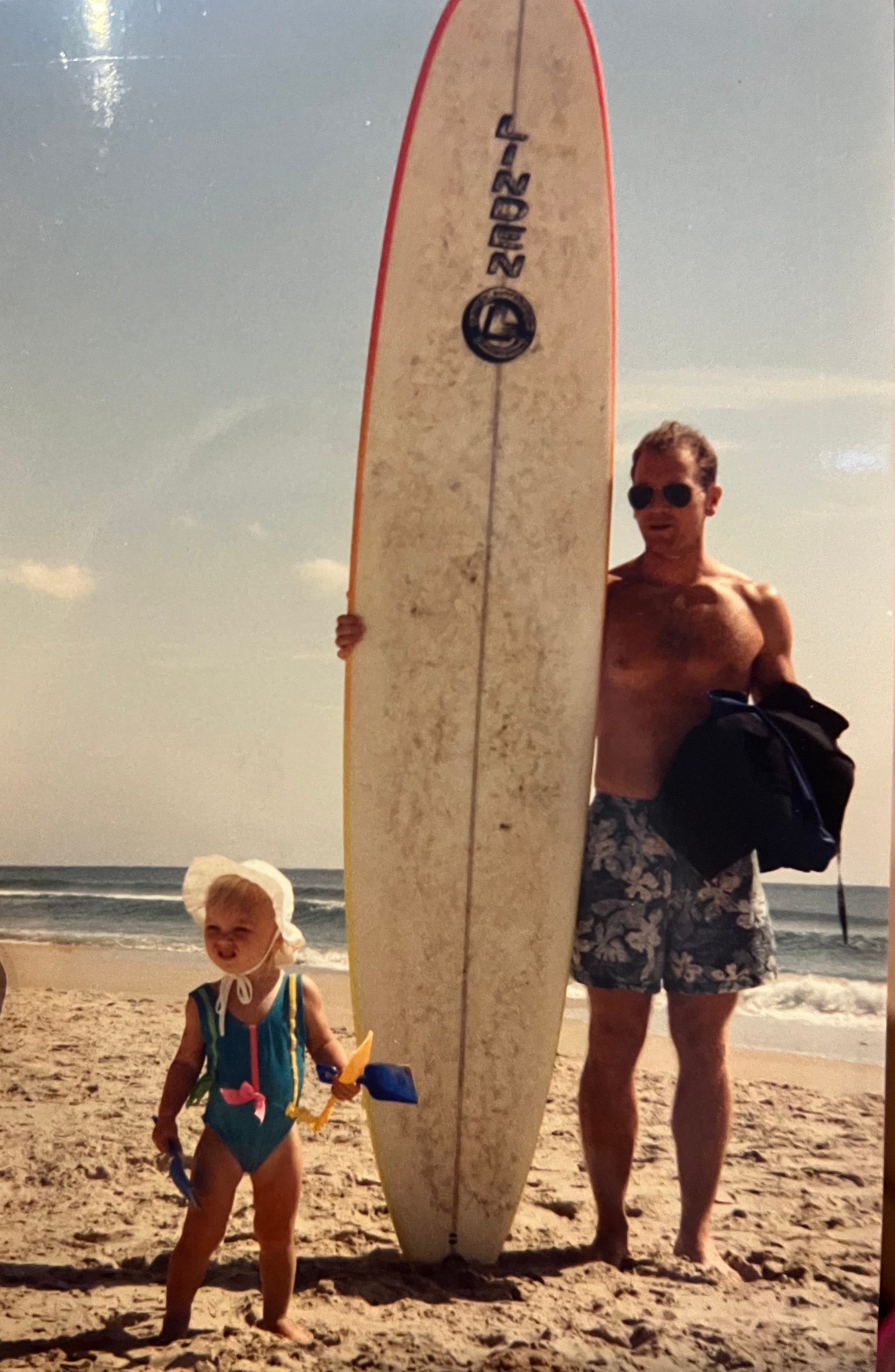
My dad started his surfing career when he and his family arrived in Emerald Isle around 1961. Below is a story where he talks about first starting to surf. Anyone who is familiar with Emerald Isle might recognize the classic landmarks of Bert’s Surf Shop and the old Tackle Box.
When we got down to the beach, I couldn’t surf, you know, and I didn’t really know how to do it or anything like that. Then I was big into track because I’d done track in school, so I was just running all over the place. Then I started noticing Bobby, my older brother, he was going out there surfing with his friends, making friends with the guys that were about his age, and I was pretty young. But I saw Bobby start to enjoy the surfing, and I went, “Whoa, that’s my surfboard. I want to get... I want to start surfing.” So that first year that we got there, yeah, we... I got into surfing pretty big, and for a while, that’s all you did when you lived at Emerald Isle, when you’re a teenager kid, all you did was skateboard and go surfing.
Now it’s probably... they’ve got a lot more to do now, but surfing really, really, really, really struck a chord. And you know, it got me going good. And then the next year, we started buying a new surfboard every year, and you know, the next thing you know, there’s nothing else to do, and I never... I wasn’t smoking dope or anything like that, but I really got into surfing, you know, and I had a knack for it, and I just kept getting better and better and better.
And then I got a pseudo sponsorship with Bert’s Surf Shop, where he would at least give me a surfboard at cost, so I could buy about whatever surfboard I wanted. I was working at the Tackle Box to make the money to go buy a surfboard. Curtis, Curtis C. was a big character in my life, especially during that time. But Curtis wanted to get into surfing too, and I lived... you know, we lived in a trailer. Curtis would come up, and he’d take a stick and rip through the screen to poke me to get me to wake up because he had to work all day. So he would wake me up so we could go surfing.
And then I used to do a lot of working with the Tackle Box, which was the community little store on Emerald Isle at that time.
I was just talking about surfing and Curtis, you know, waking me up in the morning with a stick, tearing up the screen at the trailer.
— Charlie
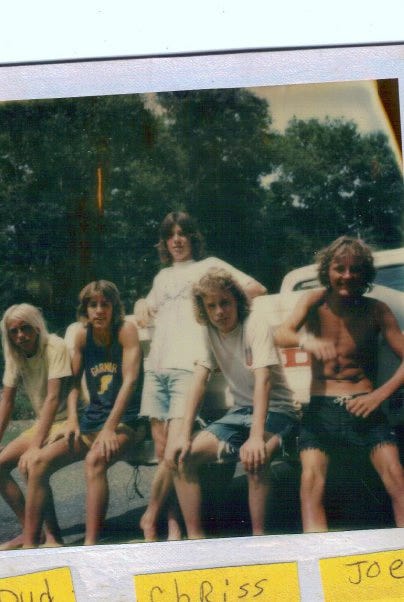
For those of us who know Emerald Isle, who love Emerald Isle, it’s not hard to picture Curtis poking a stick through the screen of the trailer, waking up my dad to go surfing. You can hear the crickets and smell the salt water, hosing down after the beach, feel your bare feet on the wooden docks and board walks, jumping on a bike or skateboard back to the cottage, fresh freckles on your cheeks.
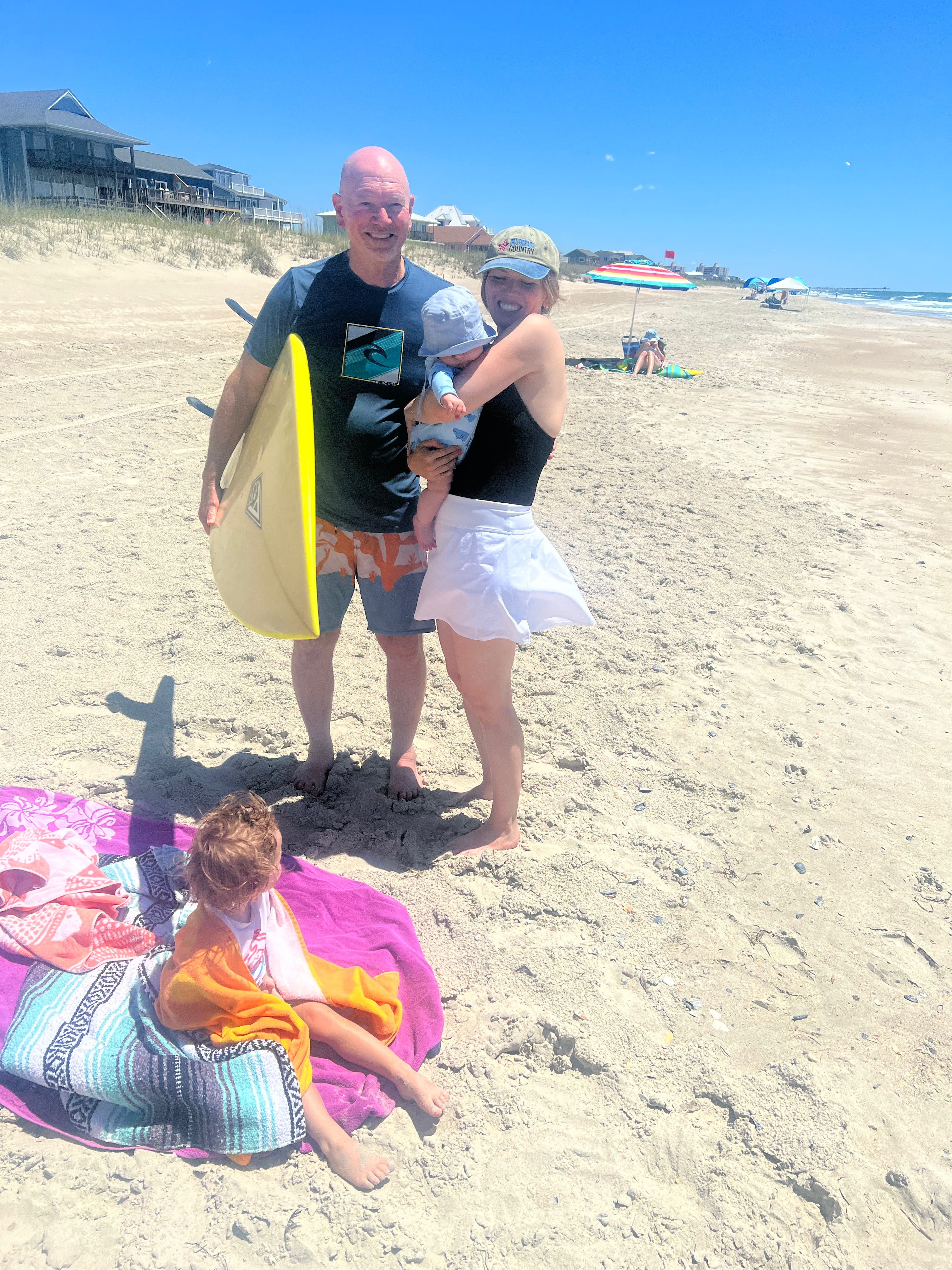
My dad was diagnosed with Alzheimer’s last year – the same disease we lost his mom to when I was in high school. It hurts to think of his memories and stories slipping away. I’m grateful to his wife Jamie for helping him to record and share some his memories, for my sons, for their stories and the stories they’ll hopefully one day share with their children and grandchildren.
Here’s another poem I wrote in college about Emerald Isle and my parents. It was an “anagram assignment” which had particular rules that now I can’t quite remember. Let me know if you figure it out.
North Carolina
my parents’ accents’ tell beach stories like songs, a choir
of orange sunsets on the sound, marsh mud footprints past thin
wrinkled paper bag fishermen that croon
bout shrimp and changing tides, hold hands at rocking chair
cricket concerts in green tobacco fields, cloth
yellow dress the day they met, sound of the train
at night in bed, sea gulls and sand dollars chart
maps in the dunes, beneath the pier they take an oath
of boiled peanuts and oysters, grandma’s hushpuppies and corn
bread, fall in love here, anchor
hold their boat, island sunshine at noon
baby born from freckles and wet hair
salty eyelashes on sand bars, Carolina color.
Such a beautifully written story and a wonderful way to honor your father's life by sharing it.
What a lovely love story, thank you for sharing this perspective on lives lived in this incredible place and a joyful view of its fading memory. The barrier islands in North Carolina are fascinating for their history. Now I look forward to appreciating their recent past as context for understanding an individual.